
Tips to avoid the heat, crowds, and travel risks, including incidents like the tragic Mufrihat accident that killed 45 Indian pilgrims.
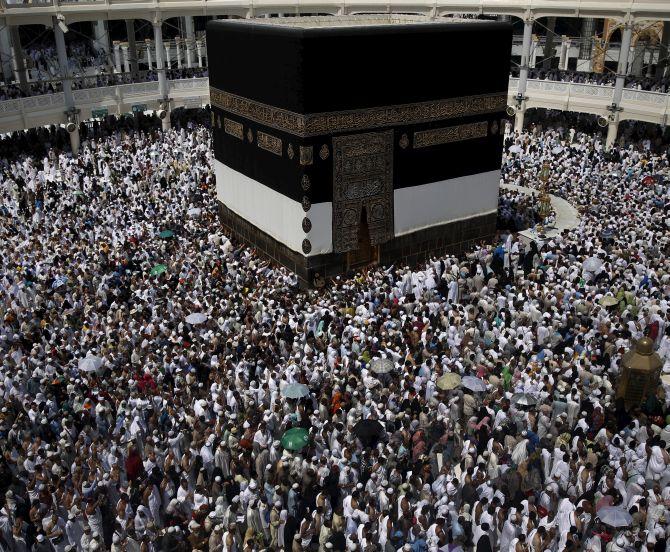
Umrah is a pilgrimage to the holy cities of Mecca and Medina undertaken by Muslims.
Unlike the Hajj, it can be performed at any time of the year except during the days of Hajj, which are based on the Islamic calendar.
While Umrah is a spiritual journey, it also requires planning, awareness, and attention to safety. Rediff explains simple ways to stay safe during the pilgrimage.
Check the Weather Before You Travel
One of the first things you should do before leaving for Umrah is to check the weather in Saudi Arabia.
The climate there is very different from many other places.
Summers can be extremely hot, and even winters feel warm compared to Indian weather.
Sandstorms can occur suddenly, so it is wise to cover your ears and face with a cloth when you go outside.
Because of the heat, carrying a water bottle with you at all times is very important.
Dehydration and heat stroke can happen quickly, especially for people who are not used to such high temperatures.
In some months, the temperature in Saudi Arabia can reach up to 51 degrees Celsius, which can be dangerous and even life-threatening.
If possible, try to avoid travelling for Umrah during peak summer.
Most taxis and private cars in Saudi Arabia are air-conditioned and comfortable, which helps you stay cool.
However, it is better to book your taxis or transport services before you arrive to avoid last-minute problems.
Heat Shock after Landing
When you arrive at Jeddah airport, be prepared for a sudden change in temperature as soon as you step outside the cool airport building.
The drive from Jeddah to Mecca takes one to two hours, but even a short time outdoors can make you sweat heavily.
Avoid taking too many cold showers immediately after being outside.
Moving repeatedly between very hot outdoor temperatures and very cold hotel rooms can make you fall sick.
Try to keep your body temperature steady and avoid sudden changes.
Stay Away From Construction Sites
Mecca has many active construction projects, especially near the Haram area (the area around Masjid al-Haram, the Grand Mosque that surrounds the Kabba).
These sites can be risky. In 2015, a major crane accident near the mosque killed 111 people.
To stay safe, avoid walking close to construction zones and follow all signs and safety instructions.
Managing Crowds During Tawaf
Tawaf, which is walking seven times around the Kaaba, is an important part of the Umrah. Although the Umrah season is generally less crowded than the Hajj, large groups still gather, especially during prayer times.
Hotels near the Haram often have 24-hour live television channels showing the crowd levels around the Kaaba.
This helps you choose the safest and least crowded time to go for Tawaf.
Early morning is usually the best time.
If you are elderly, travelling with children, or have health issues, planning your Tawaf when the crowd is smaller will make your experience easier and safer.
Understanding Sa‘i Between Safa and Marwa
After Tawaf, pilgrims perform Sa‘i, walking seven times between the hills of Safa and Marwa. This totals about 3.2 kilometres.
Sa‘i remembers the actions of Hajar, the wife of Prophet Ibrahim, who ran between these hills searching for water for her baby son Ismail.
Her trust in God led to the miracle of the Zamzam spring.
Today, pilgrims repeat this act to honour her patience, strength, and faith.
The entire Sa‘i area is air-conditioned, and the walking surface is cool.
Your feet can become cold or tired. Pilgrims are allowed to wear unstitched leather socks, which help protect the feet from cold and make the walk more comfortable.
It is a good idea to carry these leather socks with you.
For those who cannot walk long distances, wheelchairs are available for a fee.
This is useful for elderly pilgrims, people with disabilities, or anyone who may struggle with the distance.
Drink Plenty of Zamzam Water
Zamzam spring water is available throughout the Haram and drinking it regularly helps prevent dehydration.
Because of the heat, you should drink water frequently, even if you do not feel thirsty. This simple habit can protect you from headaches, dizziness, and heat exhaustion.
Travelling From Mecca to Medina
Many pilgrims visit Medina after completing the Umrah.
Medina is the second holiest city in Islam.
Prophet Mohammed migrated from Mecca to Medina in 622, an event known as the Hijrah, which marks the beginning of the Islamic calendar. It is recorded that the Prophet's journey took about eight days, including the time spent hiding in the Cave of Thawr to escape the Quraysh tribe.
Today, the journey from Mecca to Medina is much easier. It takes about five hours by road using modern highways.
Many pilgrims travel by bus or car. However, road travel can still be risky.
On Monday, November 17, a tragic accident near Mufrihat occurred when an oil tanker collided with a bus carrying Indian pilgrims from Telangana, resulting in 42 deaths.
Accidents like this remind us to choose safe transport options and to travel carefully.
There is a high-speed bullet train between Mecca and Medina. The train is fast, safe, and comfortable, but it has strict limits for luggage weight and size.
Because of these restrictions, many pilgrims prefer to travel by road instead.
Safety in Medina
Medina is generally calm and peaceful, but you should still be careful. Some areas may have ongoing construction work, so avoid restricted sites for your safety.
The most crowded place in Medina is the Masjid an-Nabawi, where Prophet Mohammed is buried. Visiting his grave is a deeply meaningful experience for Muslims. The crowd becomes especially thick after prayers, on Fridays, during Ramzan, and during Eid.
To manage the number of visitors, the Saudi authorities require online booking (through the Nusuk app) to enter the area near the Prophet's grave called Riyadh al-Jannah or Rawdah, a small but extremely sacred area inside the Masjid an-Nabawi.
Booking your visit ahead of time helps you avoid delays and confusion.
Safety For Children
Given the heavy rush during Umrah, it's crucial that children always have some form of identification on them.
This can include an ID bracelet with the child's name, parent contact numbers, hotel details, and group information.
For younger children who may not communicate effectively, these IDs can be lifesaving in case they wander off or get lost in the crowd.
The most important safety precaution during Umrah is to keep children within arm's reach at all times.
Holding hands and using child safety harnesses for very young kids can help maintain constant supervision.
Parents should remain vigilant in high-traffic zones such as entrances, escalators, and near the Mataaf area (near the Grand Mosque where pilgrims perform the Tawaf ritual).
Final Advice
The Umrah is a spiritual and emotional journey, but it also requires practical preparation. To stay safe, keep yourself hydrated, avoid extreme heat, stay away from construction sites, choose less crowded times for rituals, and travel carefully between cities.
With proper planning and awareness, you can have a peaceful, meaningful, and safe Umrah experience.
May your journey be smooth and your prayers accepted.






 © 2025