
Photographs: Reuters
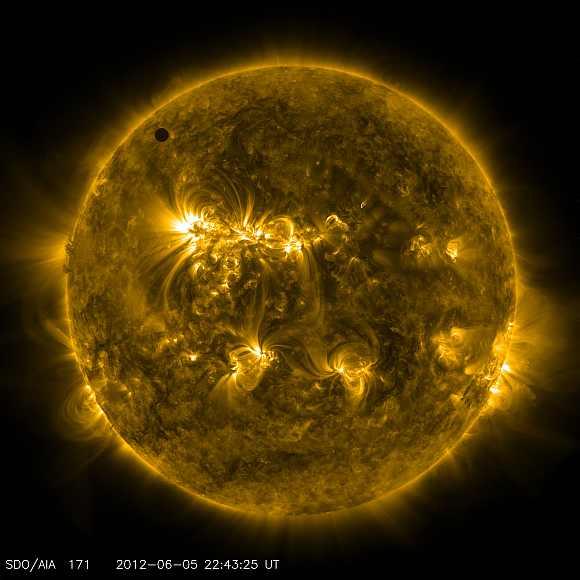
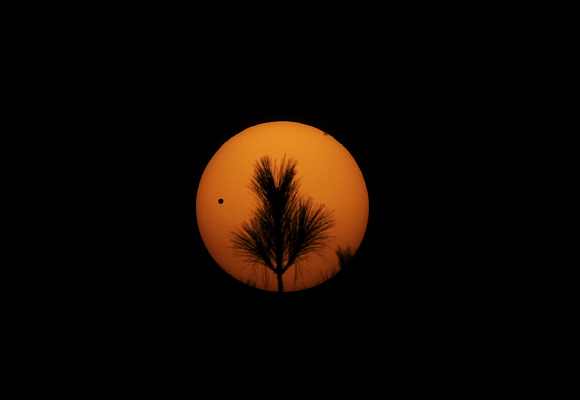
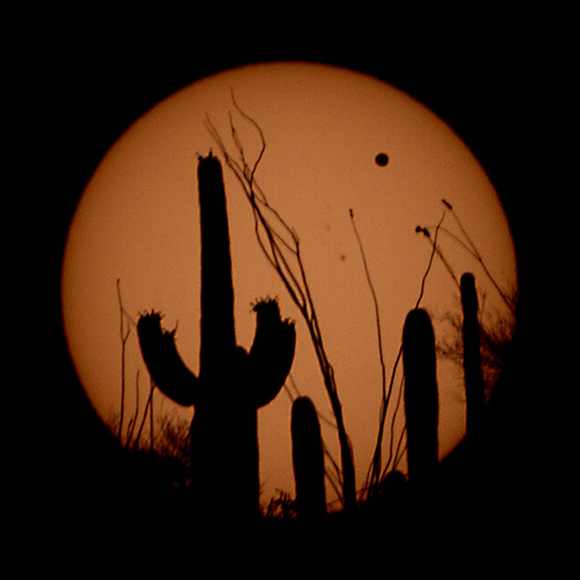
On Wednesday, planet Venus put on a rare show for sky gazers by moving across the face of the sun, producing a silhouette that no one alive today will likely see again. The next one won't be for another 105 years.
Watch the video here
Upload your pics, videos of the Venus transit here!
Click NEXT for more photos...
Venus transit leaves beauty spot on sun
Photographs: Reuters
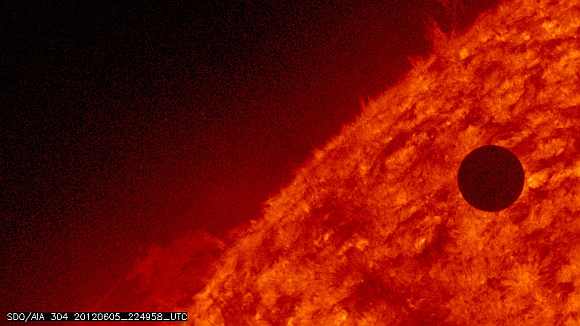
Transits of Venus are very rare, coming in pairs separated by more than a hundred years.
This June's transit, the bookend of a 2004-2012 pair, won't be repeated until the year 2117.
Venus transit leaves beauty spot on sun
Photographs: Reuters
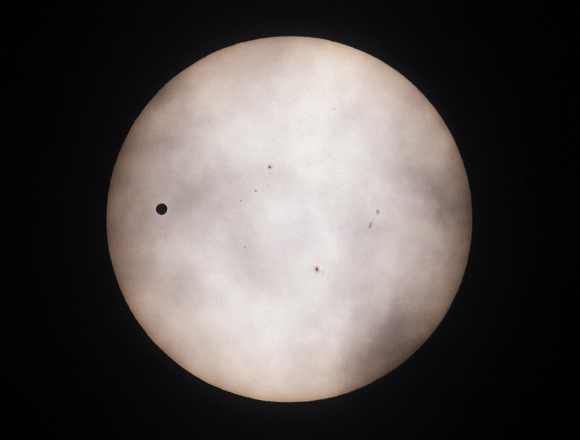
From the United States to South Korea, people around the world turned their attention to the daytime sky on Tuesday and early Wednesday in Asia to make sure they caught the rare sight of the transit of Venus. Fortunately, the event was widely visible even from India.
The nearly seven-hour transit began at 7 am Indian Standard Time on Wednesday and was visible till 10 am.
Venus transit leaves beauty spot on sun
Photographs: Reuters
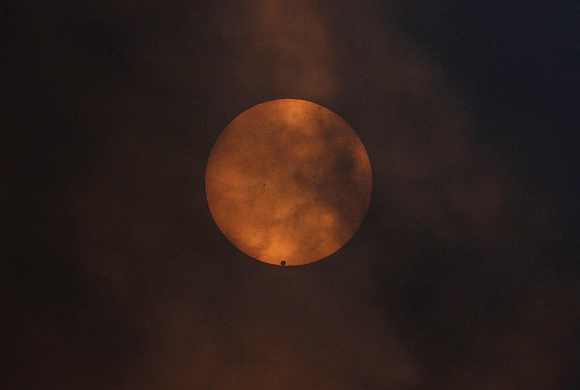
"This was the century's last Venus transit," Nehru Planetarium Director N Rathnasree told PTI.
Venus transit leaves beauty spot on sun

"It is too good to resist. It is awesome," Nisha Gupta, a schoolteacher said, who had earlier seen the 2004 spectacle also.
Venus transit leaves beauty spot on sun
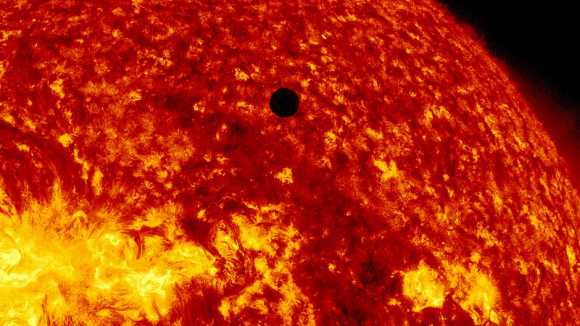
Photographs: Courtesy/Nasa
From the Earth, this phenomenon is seen when the Venus passes between the Sun and the Earth. It occurs in intervals of eight, 121½, and 105½ years, Devgun said.
Venus transit leaves beauty spot on sun
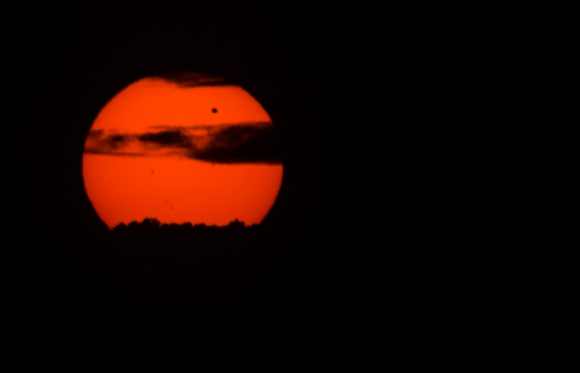
Photographs: Ayaz Asif/Flickr
The last transit of Venus occurred on June 8, 2004 and was visible across India.
Venus transit leaves beauty spot on sun
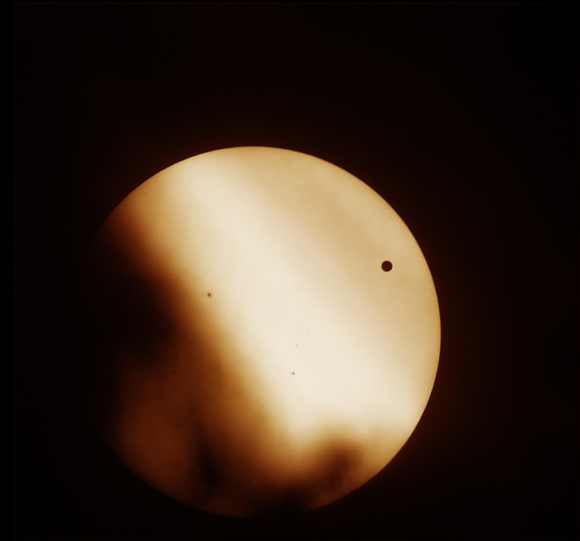
Photographs: Flickr
Transits of Venus first gained worldwide attention in the 18th century. In those days, the size of the solar system was one of the biggest mysteries of science.
The relative spacing of planets was known, but not their absolute distances. How many miles would you have to travel to reach another world? The answer was as mysterious then as the nature of dark energy is now.
Venus transit leaves beauty spot on sun
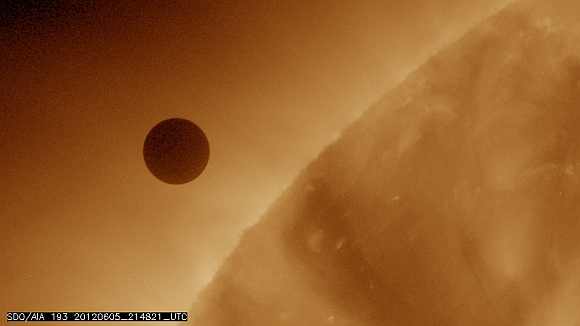
Photographs: Reuters
Venus was the key, according to astronomer Edmund Halley. He realised that by observing transits from widely-spaced locations on earth it should be possible to triangulate the distance to Venus using the principles of parallax.
Venus transit leaves beauty spot on sun
Photographs: Reuters
The idea galvanised scientists who set off on expeditions around the world to view a pair of transits in the 1760s.
The great explorer James Cook himself was dispatched to observe one from Tahiti, a place as alien to 18th-century Europeans as the moon or Mars might seem to us now. Some historians have called the international effort the "the Apollo programme of the 18th century."
Venus transit leaves beauty spot on sun
Photographs: Courtesy/NASA
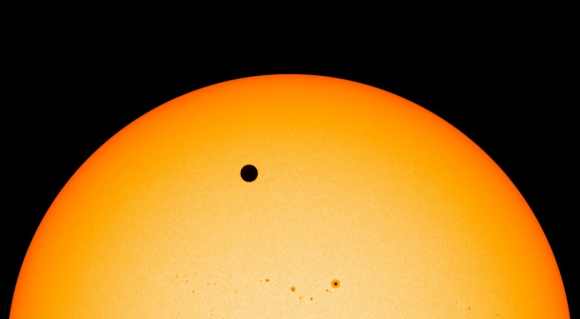
Bad weather, primitive optics, and the natural "fuzziness" of Venus's atmosphere and other factors prevented those early observers from gathering the data they needed.
Venus transit leaves beauty spot on sun
Photographs: mingclin/Flickr
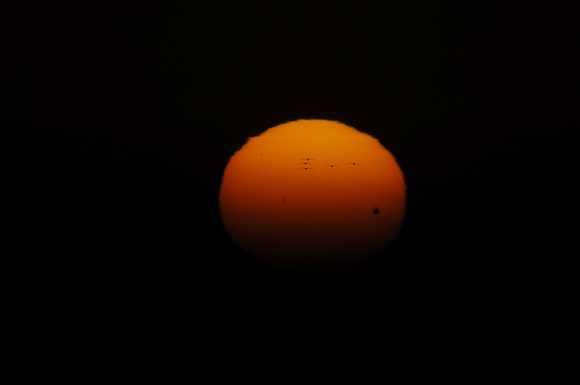
Proper timing of a transit would have to wait for the invention of photography in the century after Cook's voyage. In the late 1800s, astronomers armed with cameras finally measured the size of the solar system as Edmund Halley had suggested.
Venus transit leaves beauty spot on sun
Photographs: Jino Gamez/Flickr
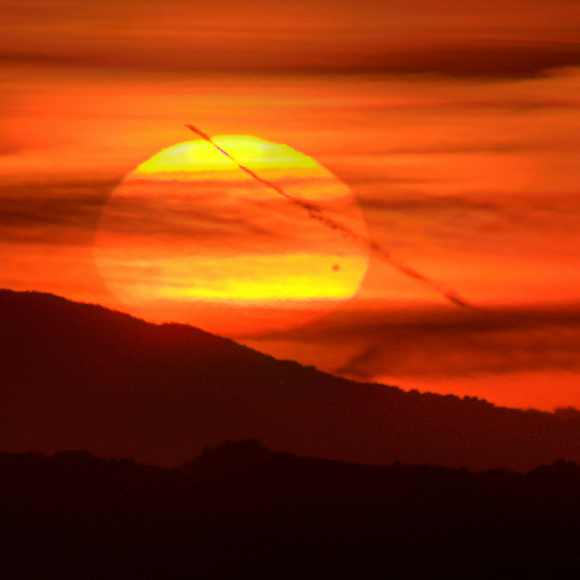
This year's transit is the second of an eight-year pair. Anticipation was high in June 2004 as Venus approached the sun.
No one alive at the time had seen a Transit of Venus with their own eyes, and the hand-drawn sketches and grainy photos of previous centuries scarcely prepared them for what was about to happen.
Venus transit leaves beauty spot on sun
Photographs: Flickr
Modern solar telescopes captured unprecedented view of Venus's atmosphere backlit by solar fire.
They saw Venus transiting the sun's ghostly corona, and gliding past magnetic filaments big enough to swallow the planet whole.

article