
'I don't think it is right to remove him over one lapse. The focus should be on restoring operations, not on removing a key management personnel.'
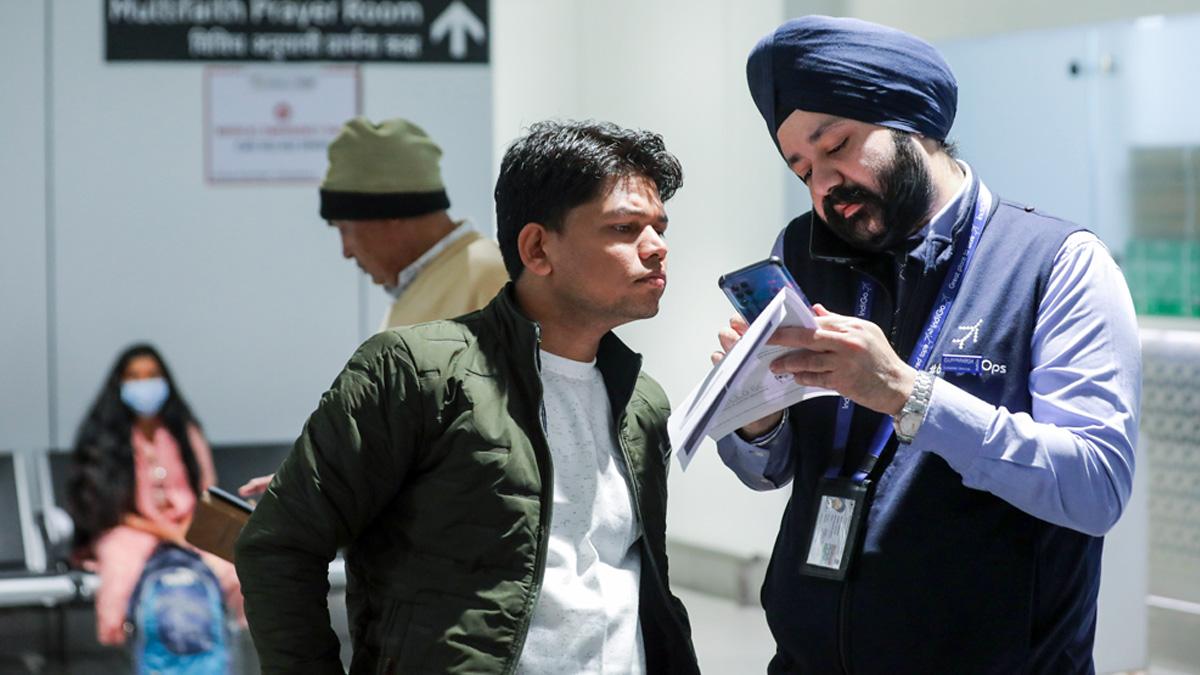
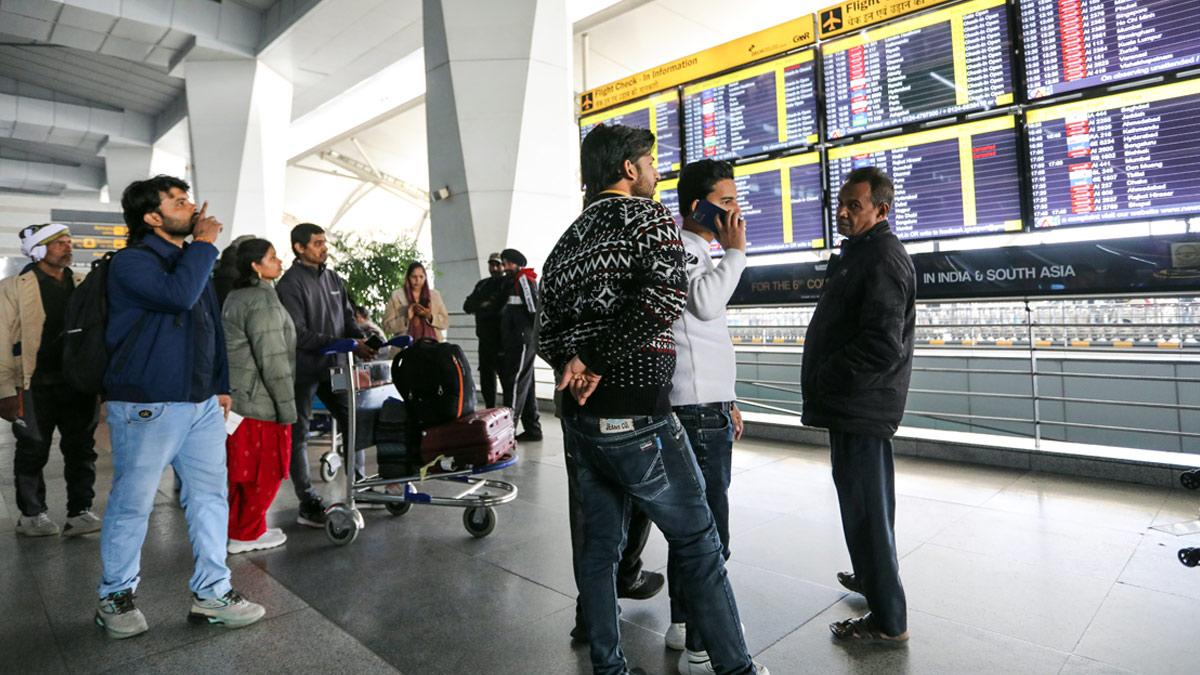
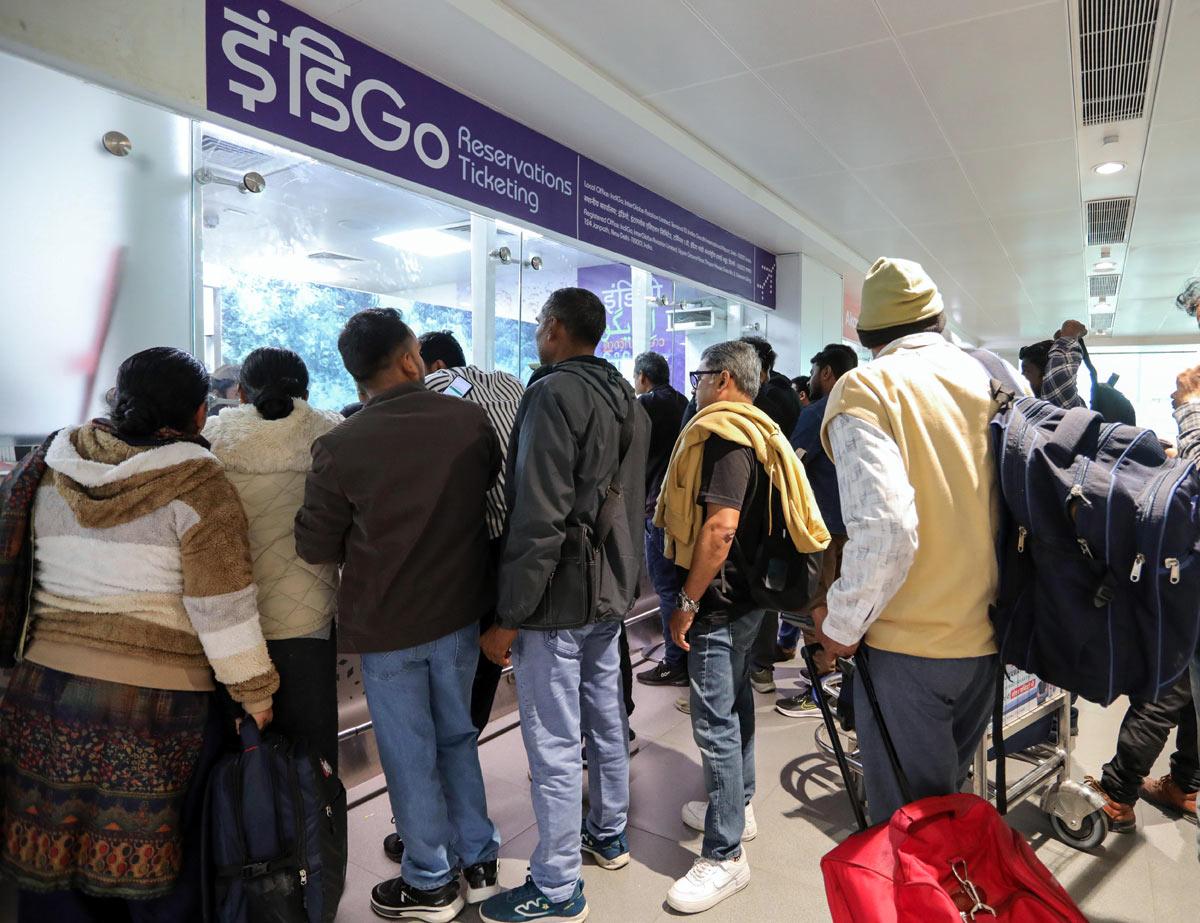
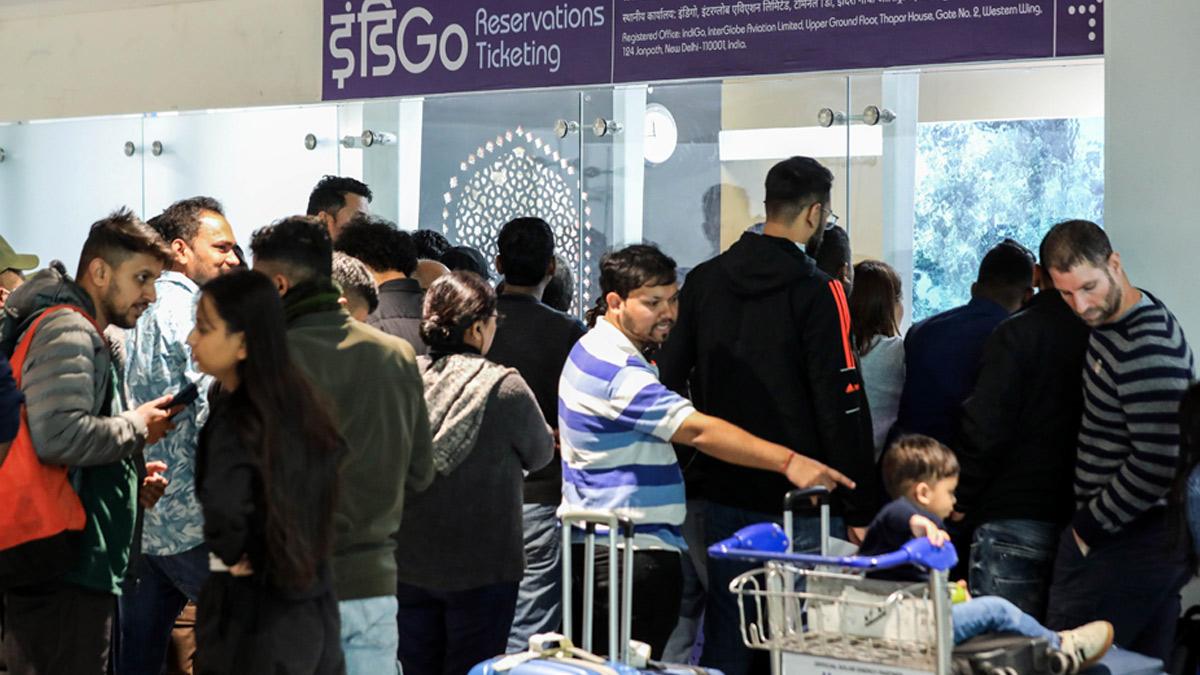
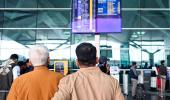
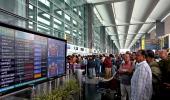
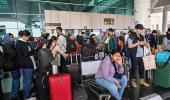
As the IndiGo crisis entered its seventh day with hundreds of flights grounded, the impact was felt beyond just the airports.
In Parliament, Civil Aviation Minister Ram Mohan Naidu said on Monday that the government would take 'strict' action in the matter and 'set an example' for the rest of the aviation sector.
Although Naidu did not specify the nature of action, IndiGo board members, when contacted, were unsure whether heads should roll because of the weeklong chaos.
On its part, IndiGo (InterGlobe Aviation Ltd) told the Directorate General of Civil Aviation (DGCA) on Monday evening, in reply to a showcause notice, that it is 'realistically not possible to pinpoint the exact cause' of the operational disruption at this time due to the airline's 'complexity and vast scale of operations'.
The company attributed the crisis to the 'compounding effect of multiple factors', which operated in an 'unfortunate and unforeseeable confluence'. The response from IndiGo CEO Pieter Elbers and COO Isidro Porqueras came after they had got additional 24 hours to reply to the DGCA showcause.
They referred to the new flight duty time limitation (FDTL), technical glitches and weather issues as some of the factors in their response.
While IndiGo flight cancellations have attracted political reactions from day one, Andhra Pradesh Chief Minister Nara Chandrababu Naidu defended the civil aviation minister -- a member of his Telugu Desam Party -- on Monday.
Naidu said the massive cancellations were caused by the airline's poor crew roster management and not government policy. Responding to political critics, he said that the crisis was being sensationalised to distract from their own failures.
Referring to IndiGo's dominant market share, that has triggered a competition debate in the country, the civil aviation minister said India had the potential to support five major airlines.
Encouraging new entrants remains a government priority, he said.
Shares of InterGlobe Aviation fell nearly 9 per cent on Monday, with the company losing nearly Rs 18,000 crore (Rs 180 billion) in market valuation. This month, the airline's stock is down over 16 per cent.
Aviation Minister Naidu -- in his speech in the Rajya Sabha on Monday afternoon -- squarely blamed IndiGo for the crisis.
'We are not taking this situation lightly. We are doing an inquiry. We will take very strict action,' the minister said.
What IndiGo board members think
A board member, while talking to Business Standard on the condition of anonymity, said that removing IndiGo CEO Pieter Elbers was an option, but added that finding a chief executive who can run an airline operating around 2,300 daily flights is not easy, and any such decision would have to be carefully thought through.
When asked whether there was unanimity within the board on retaining or removing Elbers, the member replied: "No."
After a pause, the member added that if government pressure "intensified" and if the financial penalty was "substantial", top management change could be considered.
A second board member said Elbers had handled multiple crises during his long aviation career, and this is "another major crisis" he must manage effectively.
"He was the CEO of KLM (KLM Royal Dutch Airlines) before. He is known globally as a thorough professional. I don't think it is right to remove him over one lapse. The focus should be on restoring operations, not on removing a key management personnel," the member said.
The second member added that disciplinary action could be directed instead at several other senior executives responsible for managing the pilot duty roster and overseeing hiring.
A third board member acknowledged that the situation had turned critical, but said it was now improving, as reflected in the rising on-time performance (90 per cent on Monday as compared to 75 per cent on Sunday).
"Another airline in India recently had an air-crash incident. Moreover, it was recently found they operated an aircraft multiple times with an expired licence. Their CEO has not resigned," the member stated. "So demanding Elbers' removal -- for an operational disruption -- does not make much sense."
"Yes, people suffered because of operational mismanagement, but there has been no safety lapse or loss of life."
However, the third member also noted that discussions with the government were underway, and the final decision on Elbers' tenure could be "different" from what the member personally prefers.
IndiGo has nine members on its board. The airline is chaired by Vikram Singh Mehta, a former IAS officer and ex-head of Shell India who now runs a policy think-tank. Promoter-director Rahul Bhatia serves as managing director.
The board also includes senior lawyer Pallavi Shardul Shroff and former Indian Air Force chief Air Chief Marshal Birender Singh Dhanoa as independent directors. Michael Gordon Whitaker, former head of the US Federal Aviation Administration, is also an independent director.
Meleveetil Damodaran, former Sebi chairman, sits on the board as a non-executive director, along with finance veteran Anil Parashar and former WestJet chief executive Gregg Albert Saretsky. Amitabh Kant, former Niti Aayog CEO, is also a non-executive director.
Elbers and Porqueras responded on Monday to the show cause notices issued by the DGCA on Saturday.
Reiterating what the airline has said several times publicly during the last few days, they said that 'minor technical glitches, schedule changes linked to the start of the winter season, adverse weather conditions, increased congestion in the aviation system, and implementation of and operation under the updated crew rostering rules (phase 2 of FDTL rules)' were the factors that contributed 'in lesser or greater measure' to the recent disruption.
They stated that the airline had been 'engaging' with the DGCA regarding 'challenges' in implementing the phase 2 of FDTL rules and were seeking 'variations, exemptions, or extensions'.
They stated that the airline had to then take the 'drastic measure' of 'rebooting' the network on December 5 to 'recover stranded customers, ease airport congestion, and reposition crew and aircraft'.
The DGCA's revised FDTL rules entered their second and final phase on November 1, activating seven clauses deferred during the July rollout.
Phase 2 tightened limits on how long pilots can fly or remain on duty during the early-morning 'window of circadian low' (roughly 0200 to 0600 hours), when fatigue risk is highest.
For example, Para 3.11 defines 'night duty' as any duty period overlapping 0000 to 0600 hours in the pilot's acclimatised time zone, and Para 6.1.4 caps flight time during such duty to 8 hours, total duty time to 10 hours (including pre- and post-flight tasks), and typically allows no more than two landings during these periods.
Moody's Ratings, meanwhile, said on Monday that IndiGo's large-scale flight disruptions -- triggered by its inability to prepare for aviation rules that regulators had notified more than a year earlier -- could lead to revenue losses and possible penalties for the 1cancellations.
In its assessment, Moody's described the situation as 'credit negative for IndiGo.
Photographs curated by Anant Salvi/Rediff








 © 2025