
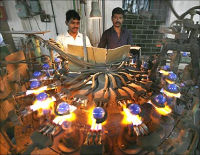
 The operating environment of small and medium enterprises in India has never been an object of envy.
Despite accounting for 40 per cent of manufactured goods exports and over 70 per cent of sectoral employment, SMEs have consistently been the Cinderella of the Indian economy.
The inability to revitalise the SME sector has arguably been the primary reason for India being reduced to simply admiring China's manufacturing prowess from afar.
Concerns about inclusive growth will continue to ring hollow as long as this very important sector of the economy is allowed to languish.
SMEs have traditionally been perceived as a lending risk by financial institutions, which have made it extremely difficult for them to borrow in both domestic and international markets.
While the Reserve Bank of India moved to relax lending rules in 2008, it left the actual decision to lend to individual banks, which have yet to shed their earlier misgivings.
The result is: SMEs tend to be highly undercapitalised, characterised by pervasive technological obsolescence.
Following the economic recovery of the past two years, SMEs increasingly have to contend with another problem: rising wage inflation.
Nominal wages in the industrial sector are estimated to have gone up by 23 to 28 per cent in recent months, which is squeezing the already precarious situation of the SMEs.
As expected, sharply rising wages have resulted in a high employee turnover, which sharply reduces the incentive for employers to invest in augmenting skill levels through on-the- job training.
Studies across the board indicate that the employers are able to capture a significant proportion of the returns from training only if it is firm-specific
id="shop_advertise_div_1">










 © 2025