
One of the most exploited provisions is Section 10(13A), which permits exemption on HRA.
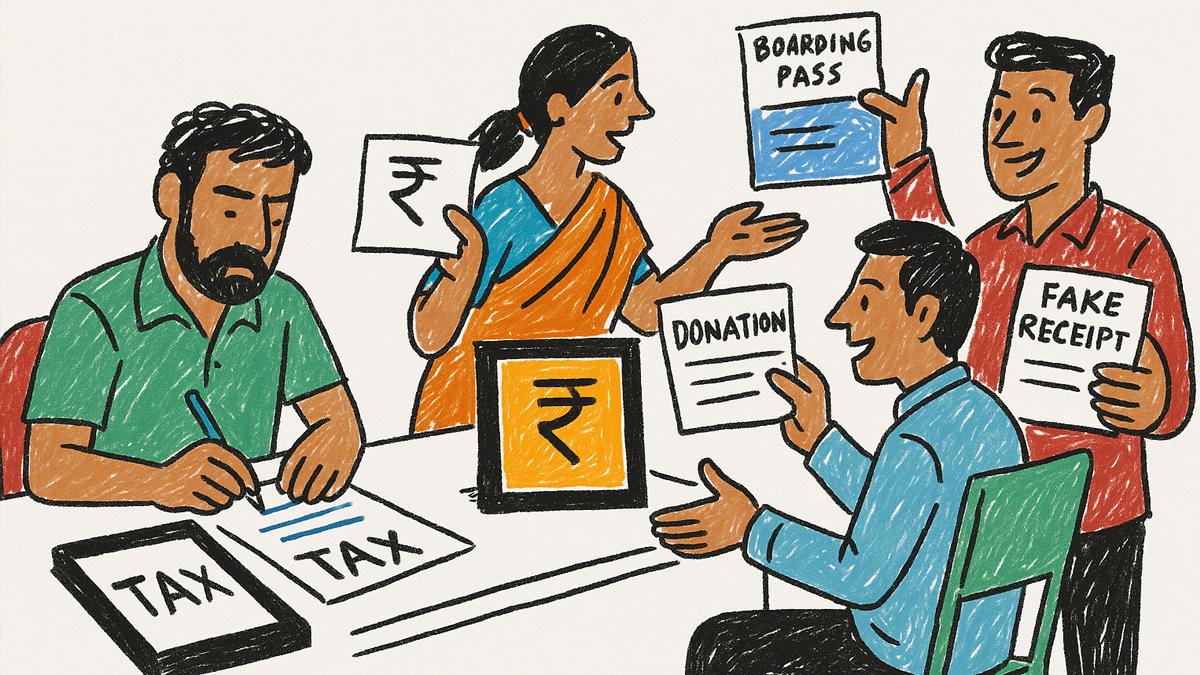
The income-tax (I-T) department has uncovered a large-scale racket involving return preparers and intermediaries who helped clients file fraudulent income-tax returns (ITRs).
These returns falsely claimed deductions and exemptions.
HRA and LTA: Heavily misused
One of the most exploited provisions is Section 10(13A), which permits exemption on house rent allowance (HRA).
"Taxpayers often submit fabricated rent receipts or falsely declare parents or relatives as landlords to claim HRA exemptions," says Preeti Sharma, partner, tax and regulatory services, BDO India.
"Employees sometimes prepare false lease deeds, or claim that payment was made in cash so that there is no bank trail," says Arvind Rao, founder, Arvind Rao & Associates.
Leave travel allowance (LTA) is also misused through forged tickets and boarding passes.
Bogus donations and premium receipts
Donations to charities (Section 80G), political parties (80GGC), and scientific research institutions (80GGA) are another source of fraud.
"Sometimes, these donations are made by cheque, the donor gets a receipt, and later the money is returned to the donor," says Rao.
"In some cases, political parties that are registered, but inactive on the ground, are used as conduits for bogus donations," says Shefali Mundra, tax expert, Cleartax.
Fake receipts are also used to claim deductions under Section 80D (medical insurance), or to claim insurance and investment-based deductions under Section 80C.
"Loan-related deductions are sometimes claimed even when the loan is from a non-eligible lender (personal loan from a friend
Mundra says that while some taxpayers are unaware of the illegality and trust intermediaries to "maximise refunds", many knowingly participate in such schemes.
Opt for voluntary correction
Taxpayers can rectify false claims before scrutiny begins.
"Filing a revised return is allowed under Section 139(5) if the original return was filed on time, or a belated return was filed.
"It must be submitted three months prior to the end of the relevant assessment year, that is, by December 31, 2025, for FY2024-25, or before the completion of the assessment, whichever is earlier," says Suresh Surana, a Mumbai-based chartered accountant.
"A revised return replaces the original and is not an add-on," says Amit Baid, head of tax, BTG Advaya.
Taxpayers who miss this deadline can file an updated return.
"It can be filed within 48 months from the end of the relevant assessment year.
"An updated return cannot be filed to lower tax liability.
"It should result in payment of additional taxes over and above the regular tax and interest," says S R Patnaik, partner (head - taxation), Cyril Amarchand Mangaldas.
Depending on timing, the additional tax payable ranges from 25 per cent to 70 per cent of the tax and interest.
"Once a raid, survey, or scrutiny begins, these correction routes are largely blocked," says Baid.
Responding to a tax notice
Taxpayers must log into the I-T e-filing portal to view notices under the 'e-Proceedings' or 'View Notices/Orders' section.
"Verify the PAN, name, and assessment year in the notice to ensure it is for you," says Patnaik.
Based on the gathered evidence, prepare a cover letter addressing the tax officer to explain the basis on which the deductions were claimed.
Upload letter and documents on I-T website.
Disclaimer: This article is meant for information purposes only. This article and information do not constitute a distribution, an endorsement, an investment advice, an offer to buy or sell or the solicitation of an offer to buy or sell any securities/schemes or any other financial products/investment products mentioned in this article to influence the opinion or behaviour of the investors/recipients.
Any use of the information/any investment and investment related decisions of the investors/recipients are at their sole discretion and risk. Any advice herein is made on a general basis and does not take into account the specific investment objectives of the specific person or group of persons. Opinions expressed herein are subject to change without notice.
Feature Presentation: Ashish Narsale/Rediff











 © 2025