

Haresh Pandya
Howsoever intelligent and mentally strong, man is said to be helpless against pressing and unavoidable circumstances. In other words, he becomes a poor victim of them and sometimes even thinks of taking his own life out of sheer helplessness and frustration.
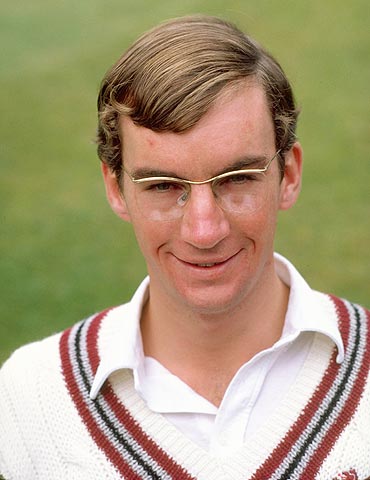
- Former Somerset captain and writer Roebuck dead at 55
- Police confirm Peter Roebuck committed suicide
It is quite possible that the force of such circumstances may have driven otherwise an erudite and seemingly cool and composed fellow like Peter Roebuck to commit suicide while on a tour as a professional cricket writer and commentator.
The former Somerset captain was a respected, even revered, cricket intellectual. He was a widely travelled and much loved cricket writer who was always in demand by various publications across the globe. He never copied any other cricket writer. His style was inimitable and was greatly admired for that.
Though apparently a simple, cheerful soul, there was always a touch of mystic about Roebuck, something his sad and successful attempt to take his own life unfortunately confirms. It is an irreparable loss not only to cricket journalism but also to sports literature, for he penned some truly great books about the willow game and its practitioners.
Roebuck's tragic death brings to mind at least two other incidents of highly successful and popular cricket writers and commentators committing suicide -- RC Robertson-Glasgow of England and Berry Sarbadhikary of India.
Robertson-Glasgow, affectionately called Crusoe, was an outstanding cricket writer, who was also involved in a fair amount of broadcasting during the early days of television, though he tended to be absentminded when on the mike. Once he informed the viewers of the arrival at The Oval of the Prime Minister Winston Churchill and his wife when, in reality, the occupant of No 10 at the time was the cricket-loving Clement Attlee!
Crusoe's cheerful demeanour and joie de vivre belied, and concealed, his sensitive nature and deep personal sadness. He was a manic depressive, suffering from "bipolar disorder", and had frequent spells of breakdown -- the first in 1921, the second in 1924 and the third in 1931, when he cut his throat and the scar remained forever. He made several other attempts, with overdoses, to kill himself.
Roebuck not the only cricket writer to end his own life
Crusoe met Elizabeth, a nurse at St Andrew's Hospital, Northampton, where he had been undergoing treatment for his mental illness. They fell in love and married in 1943. The marriage proved to be one of the few positive things in the otherwise mentally tormented life of Crusoe, who, ironically, gave the impression of loving both life and people abundantly.
Indeed, there cannot be a more disturbing irony than the fact that Crusoe committed suicide, by taking an overdose of barbiturates, on March 4, 1965, during a snowstorm while in the grip of acute melancholic depression, leaving a legacy of his immortal cricket writing.
There was a sadder affinity between Crusoe and Alan Gibson, who was not only a brilliant commentator but also a very powerful cricket essayist. They had fallen preys to deep depression of spirit. Doubtless Gibson was an enigmatic genius with a destructive streak. He was an alcoholic, a man of moods and temperamental. While Crusoe did commit suicide, Gibson seriously thought of taking his own life a couple of times. He had a spell in a psychiatric hospital and wrote movingly about it in A Mingled Yarn.
Sarbadhikary was almost a household name in Indian cricket when radio ruled supreme. He was a very popular commentator and equally successful cricket writer, just like what Harsha Bhogle is today. But it was as shocking as it was bewildering that such a man as Sarbadhikary, who was born in 1912 in a distinguished Calcutta family and brought up in the lap of luxury, who personified the very best aspects of old-world charm and grace, committed suicide by jumping from the third floor of the boarding house in Crawford Market in Mumbai, where he lived, because of "financial difficulties", on December 19, 1976.
Comment
article