
The Doha round of global trade talks is facing a slow death and if trade negotiators from all the 153 member countries fail to reach a deal by the end of this year, the consequences can be disastrous for the multilateral trading system, says Jean-Pierre Lehmann, professor of International Political Economy and Founding Director, The Evian Group @ IMD in an interview with Business Standard during his recent visit here. Edited excerpts:
Now that the Doha round of negotiations is almost completing its 10th year of existence, several voices are saying the round has become obsolete. What is your view on this?
It is perhaps not surprising the impending death of Doha attracts comparatively little attention in the current turbulent environment with many unexpected events like uprisings in West Asia and North Africa, tragedies in Japan, wars in Libya and Cote d'Ivoire, international monetary instability, rising inflation and food crises among others.
. . .
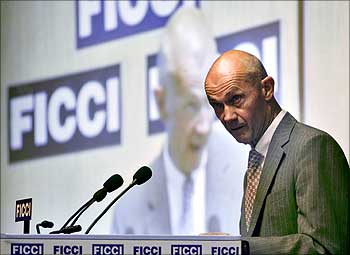
This is in spite of the warnings on the costs of failure expressed by World Trade Organisation Director General Pascal Lamy. Yet, the consequences of the failure of Doha in the longer term may be as profound as the consequences of many more news-worthy events.
Without knowing it, we may be witnesses to the death of the rules-based multilateral trade system. If Doha fails to conclude this year, its prospects over the next few years are dismal.
What do you think went wrong in all these years of long-drawn and tiring negotiations? Does this show lack of political will by key member countries?
Trade negotiators, over the years, have displayed a shocking inability to adjust to the new paradigms and carried on negotiations as if nothing had changed and nothing was going to change.
There was never any attempt to sell Doha to the broader public; instead negotiators never failed to stress the sacrifices their constituents would have to make.
Consequently, rather than working together to determine the best possible outcome for the broader public good, the spirit remained one of mercantilism, based on narrow national sectoral interests.
The global economic paradigm has changed beyond recognition. There are new actors, new technologies, new opportunities, new needs that in 2001 were not only non-existent but by and large unimaginable.
We are in profound transition in many respects, not the least of which is demographic.
. . .

How do you view the recent uprisings in North Africa and West Asia? What will be the overall impact on the world economy?
I see these as very positive developments. It is an Arab awakening. West Asia and North Africa have been going nowhere for the past few decades.
It has been not only one of the most oppressed regions, but also the least dynamic and least integrated globally, apart from oil.
The region has a very young population of around 65 per cent under 25 years of age. It will take some time for the countries to get their acts in order and it will probably vary country by country.
So long as there is no oil crisis, the impact on the world economy shall not be too significant in the near term, but can be very beneficial in the longer term.
. . .
Do you think the stance taken by NATO, in order to bring order in Libya, will have an adverse impact on the developed economies?
At this stage, the significance is mainly geopolitical. This is arguably the first geopolitical offensive not led by the United States. It reflects the occurring shifts, though not very clear where they will lead to.
Europe cannot be regional, let alone, global policeman. The main negatives will be if the mission fails. One of the problems, however, is that since success or victory has not been defined, it is not clear either what failure will mean.
(Muammar) Gaddafi hanging on, however, will presumably be seen as failure. This will cause confusion and perhaps turbulence in the geopolitical order and may underline lack of confidence among investors and the business community. Business can deal with risks.
What we are talking about now is not risks in the conventional sense of the term, but deep uncertainties and unknowns.
. . .
How do you think will the crisis in Japan pan out for Asia? Do you think overall trade in Asia will suffer a setback following the disaster?
Clearly, Japan counts even if it has been in the doldrums for the past couple of decades and is now a disaster zone. It is the world's third biggest economy and a major investor in Asia.
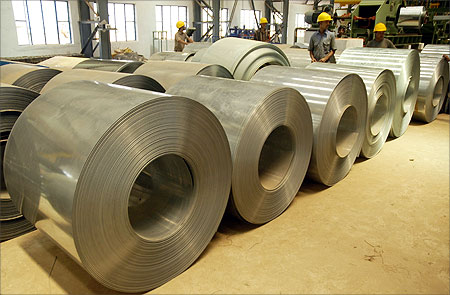
The supply chain has been disrupted due to the disaster and will inevitably cause delays and more uncertainties.
On the other hand, it may also see more delocalisation of Japanese products to Asia.

 © 2025 Rediff.com - Investor Information - Advertise with us - Disclaimer - Privacy Policy - Feedback - About us - Terms of use - Grievances